
Elocity: Building a Smarter, More Connected EV Ecosystem

Strategic Ventures Impact Insights: September 2026 (Volume 4, Number 9)


Elocity: Building a Smarter, More Connected EV Ecosystem

EV charging companies tend to take one of two approaches. Some sell software that runs on other companies' hardware. Others build and control both the hardware and the network. Elocity does both at once. It designs its own smart charging hardware and software, and its HIEV platform is OCPP-certified and works with more than 50 charger models. That openness is important. The Open Charge Alliance says standards like OCPP make integration less risky, make it easier to run chargers from several vendors, and let operators switch network providers without replacing stations they already own. Elocity's customers get an integrated system with intelligent load management and power sharing, and they aren't locked into one company's equipment.
Elocity also manages energy, not just chargers. Its technology supports dynamic load management, grid-aware charging, EV telematics and vehicle-to-grid (V2G) integration. The U.S. Department of Energy says these capabilities can reduce costly electrical upgrades, lower charging costs and connect EVs with buildings, renewables and the grid. That's why Strategic Ventures is working with Elocity. The company pairs proprietary technology with a clear market need and room to scale. As the industry moves from installing more chargers to managing energy intelligently, we think Elocity's mix of owning its technology while staying open will matter more and more.
To read more, click here.
Please contact Mitchell Hauser or Tony Coretto for further information or to arrange a meeting with Sanjeev Singh, Elocity's CEO.

Elocity Founder Sanjeev Singh: Building the Intelligence Behind the EV Transition
"The industry spent a decade solving for the plug. The constraint was never the plug, it was the panel behind it."
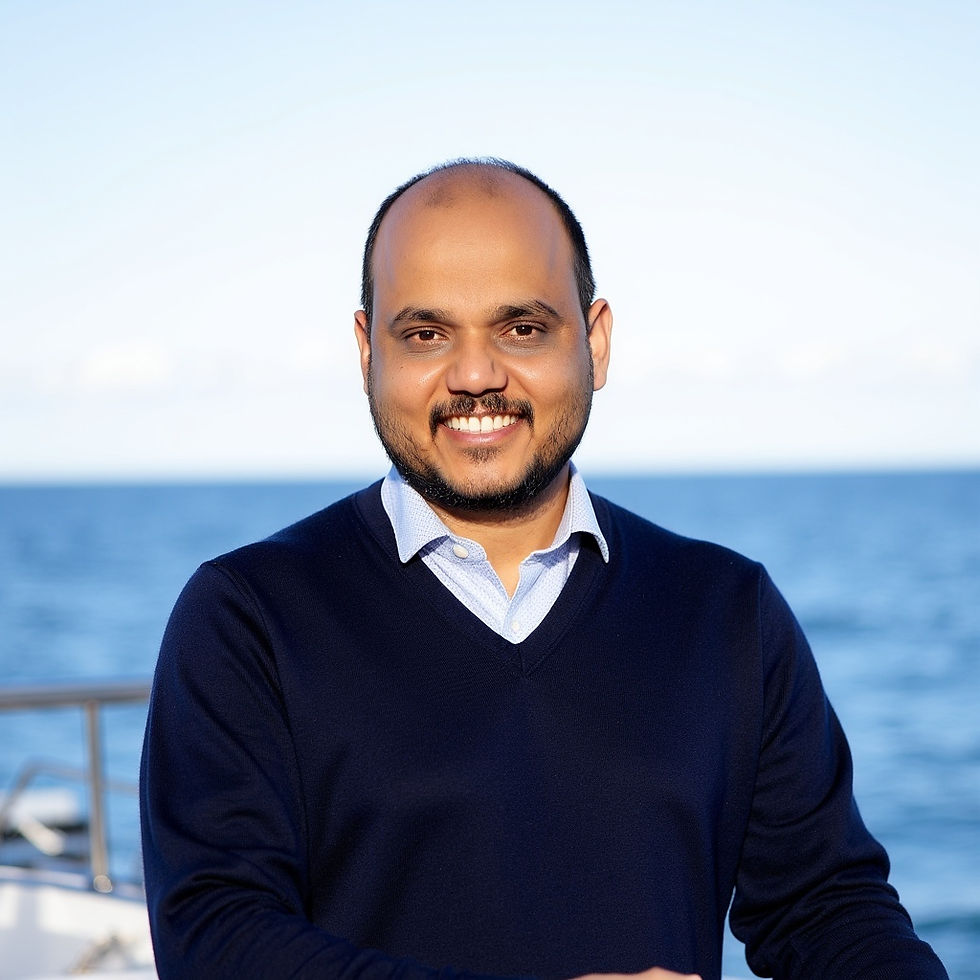
Sanjeev Singh, Founder and CEO of Elocity Technologies, came to that view after more than 18 years leading digital transformation in the energy industry. He is an electrical engineer and a certified energy auditor, and his work taught him a basic fact about electrification: a building has only so much electrical capacity. When he founded Elocity in Toronto in 2018, he didn't build it around the charger. He built it around one question: how much charging can a building's existing electrical system actually support? Elocity answers that with utility-grade charging hardware, OCPP-certified software and intelligent load management that shares the available capacity among connected vehicles.
The approach is working. Elocity has deployed more than 8,000 chargers and completed the two largest multi-unit residential smart charging projects in North America. It now operates in more than 12 countries across four continents. Sanjeev says, "Every amp a building already has is an asset. Our job is to make sure none of it goes unused, and none of it gets exceeded." Elocity focuses on the limits of a building's electrical system rather than on selling more hardware, and that focus still guides his plan for a smarter EV transition that can grow.
To read more, click here.


Linebird Awarded $1.2M NSF SBIR Phase II Grant
Linebird, which builds drone technology to make power line work safer, has won a $1.2M SBIR Phase II grant from the National Science Foundation. The non-dilutive funding will pay for more field testing around high-voltage transmission lines, stronger ROI modeling for utilities and the commercial release of new technologies. It took nearly two years to go from proposal to award, and in that time Linebird closed sales with major utilities, grew its IP portfolio and ran field pilots in the U.S. and abroad. To read more, please click here.
Please contact Tony Coretto or Mitchell Hauser for more information or to arrange a meeting with Michael Beiro, Founder and President of Linebird.

ZS2 Announces Completion of Major Financing, U.S. Insurance Partnership, and Milestone Testing Program with New Strategic Partners
ZS2 Technologies has closed a significant investment round to accelerate its growth, led by two prominent Canadian First Nation investment funds, a U.S. real estate fund, and a Canadian based family office.
The financing follows the commissioning of the company's North American production facility for low carbon magnesium cement products earlier this summer. ZS2 has also been shortlisted for two Canadian government grants totaling $13MM, secured its first U.S. insurance partnership with USI Insurance Services, and entered a strategic agreement with a significant U.S. building products company to support third party testing of its TechBoard as fire rated flooring and exterior sheathing. To read more, click here.
Please contact Mitchell Hauser or Tony Coretto for further information or to arrange a meeting with Scott Jenkins, ZS2's CEO

National Cancer Institute expands Nanocrine collaboration, makes technology commercially available to other cancer researchers
Nanocrine has reached a critical threshold in the adoption of its plasmonic chip technology. A senior researcher at the National Cancer Institute (NCI) is expanding his team’s collaboration with Nanocrine not just for his own research interests, but more importantly to make Nanocrine’s technology commercially available to scores of other cancer biology labs collocated with him at the NCI.
Only Nanocrine’s plasmonic chips could have provided the data that he has found so useful in his lab: the real-time sensing of specific proteins secreted by cancer cells in the tumor micro-environment. This data, together with Nanocrine’s AI/ML software layer, will now provide the critical insights needed for more cancer researchers to deliver breakthrough research and results. To read more, click here.
Please contact Tony Coretto for more information or to arrange a meeting with Dr. Patrick Calhoun, Nanocrine's President and Chief Science Officer

Common Mistakes Founders Make in Series A Fundraising
Overvaluation, weak storytelling, misaligned targeting, and inefficient outreach
Founders raising a Series A often make four mistakes: setting the valuation too high, telling a story about the technology instead of the business, pitching investors who don't fit their stage or sector, and sending generic mass emails. Each one makes a round harder to close. What works is a valuation the company can defend, a pitch that runs clearly from problem to traction to growth, and tailored outreach to the investors who fit. To read more, please click here.


